Contents
How Sprinters Dose Diesel Exhaust Fluid
In day-to-day driving, the control module adjusts DEF flow to match how much NOx your engine is making—higher load and stop-go use = more dosing.

Closed-Loop Metering in the SCR System
Sprinters use sensors before and after the SCR to estimate NOx and command the injector to spray diesel exhaust fluid into the exhaust stream. As load rises (hills, towing, city routes), NOx increases and the module raises DEF dosing; at steady highway cruise, dosing eases off to conserve fluid.
Why You’ll See Variability
Two identical vans can show different DEF use on the same route. Payload, ambient temperature, traffic, and even recent emissions software updates can nudge the duty cycle—and the commanded dosing rate—up or down.
Typical DEF Consumption in a Freightliner Sprinter
For planning, most operators use a fuel-based rule of thumb to estimate diesel exhaust fluid needs.
Fuel-Percent “Rule of Thumb”
Across modern light- and medium-duty diesels, DEF use commonly averages ~2–3% of diesel fuel consumed (sometimes a bit lower or higher depending on duty cycle). That means ~2–3 gallons of DEF per 100 gallons of diesel in mixed driving.
Real-World Sprinter Context
Sprinter references note a DEF tank around ~5.8 gallons, with refill intervals that swing widely with usage. Highway-heavy routes often stretch intervals; urban stop-and-go or heavy loads shorten them. Treat any “miles per gallon of DEF” figure as approximate, not a fixed spec.
How to Estimate Your Van’s DEF Dosing Rate
A simple log will tell you exactly how your Sprinter uses diesel exhaust fluid under your routes.

Two Numbers, One Ratio
Record diesel gallons added and DEF gallons added over the same period. Divide DEF by diesel to get your dosing % (e.g., 2.4 gallons DEF / 100 gallons diesel = 2.4%). Repeat over a few refuels to average out noise.
When to Refill
Sprinters provide progressive warnings; after the first low-DEF message, there’s still substantial range remaining before a no-restart condition—plan a top-off well before then to avoid downtime.
Operational Factors That Change DEF Use
Even within the same Sprinter, diesel exhaust fluid consumption moves with the operating profile.
City vs. Highway
Stop-start, short trips, cold starts, and idling raise NOx per mile and increase DEF dosing. Long, steady highway runs at light to moderate load usually reduce dosing percentage.
Load, Towing & Terrain
More weight and grades = higher engine load = more DEF. If your payload pattern changed (new racks, upfitting, or towing), expect your dosing % to rise accordingly.
Sprinter DEF Tank, Range & Monitoring
Understanding the hardware helps you plan stocking and refill stops.

ank Capacity & Range
Many Sprinters use a DEF tank near 5.8 gal (22 L); depending on your dosing %, that can cover many thousands of miles for light-duty highway use, or notably less in urban or heavy-load duty. Always verify your exact model’s capacity in the owner resources.
What the Cluster Is Telling You
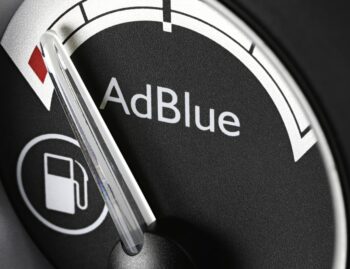
The cluster’s DEF level and low-range warnings are calibrated to give you time to refill; don’t ignore countdowns that eventually enforce a no-restart. Keep at least a couple of sealed gallons on hand for long trips.
Quality, Storage & How It Impacts Dosing
Using the right diesel exhaust fluid protects injectors and keeps dosing stable.
Spec-Compliant DEF Only
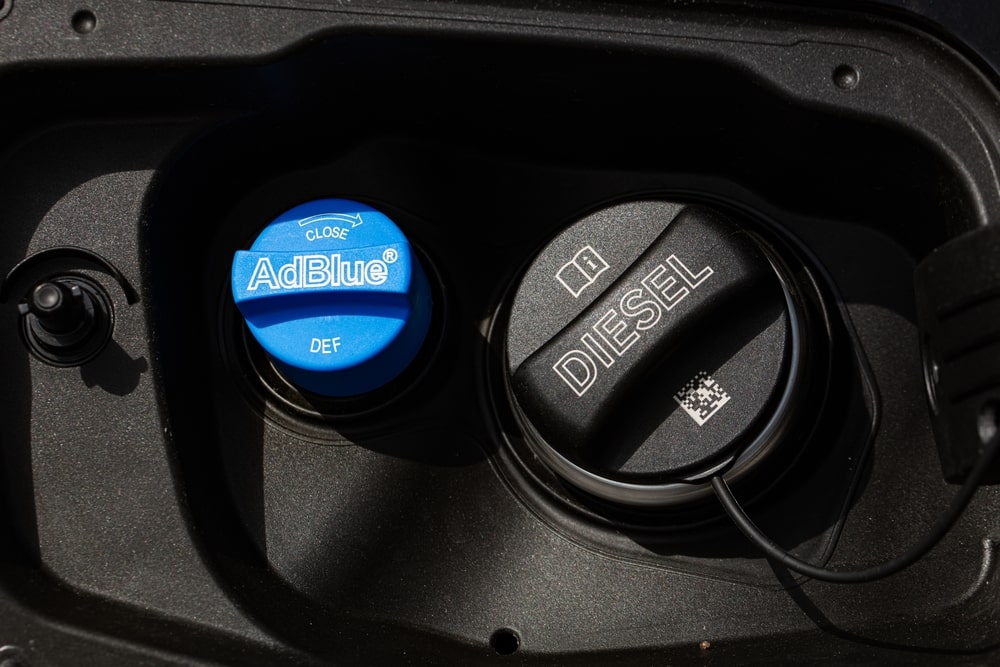
Always use ISO 22241/AdBlue-spec product. Off-spec or contaminated fluid can force higher commanded dosing (poor conversion), set faults, and risk deposits—leading to more downtime than the DEF ever cost.
Storage Habits That Help
Keep DEF sealed, out of direct sun, and within moderate temperatures; label open containers and rotate stock. Good handling prevents surprise consumption swings caused by degraded fluid.
FAQs
What’s the normal DEF dosing rate for a Sprinter?
Expect roughly ~2–3% of diesel fuel used, varying with route, load, and weather.
How big is the Sprinter DEF tank?
Many models list ~5.8 gal (22 L); confirm your model year/engine.
How far can I drive after the first low-DEF warning?
You typically have significant remaining range before stricter warnings/no-restart, but refill as soon as possible.
Can DEF quality change my consumption?
Yes. Off-spec or contaminated diesel exhaust fluid can reduce SCR efficiency, prompting higher dosing and fault codes.
Should I top off DEF every time I refuel?
It’s a common best practice—easy to remember and keeps you clear of countdown warnings.
Conclusion
While the exact DEF dosing rate in a Freightliner Sprinter flexes with your duty cycle, planning around a low-single-digit percentage of fuel will keep you covered. Pair that with spec-compliant, high-purity diesel exhaust fluid and sound storage, and your SCR system will run clean and trouble-free. Azure Chemical supplies premium DEF, practical testing tips, and fleet stocking guidance—so you can stop guessing, stay compliant, and keep your Sprinter on schedule. Schedule your deliveries today.