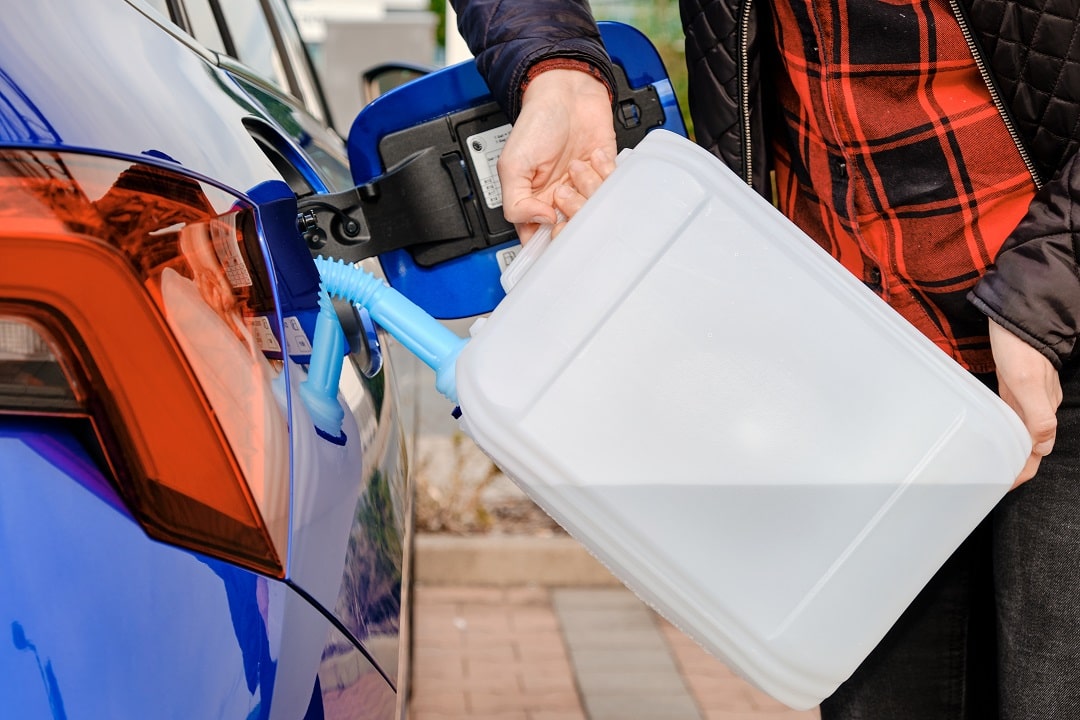
If you drive a modern diesel truck, manage a fleet, or operate diesel-powered equipment, you may have seen a blue filler cap or a dashboard warning labeled “DEF.” But what is DEF, and why does a diesel vehicle need it?
DEF stands for diesel exhaust fluid. It is a clear solution made from 32.5% high-purity urea and 67.5% purified water. Vehicles equipped with selective catalytic reduction, commonly called SCR, inject DEF into the exhaust stream to help convert harmful nitrogen oxide emissions into nitrogen and water vapor.
DEF is not diesel fuel, and it is not a fuel additive. It belongs in a separate DEF tank and never in the diesel fuel tank. Using the correct fluid, storing it properly, and refilling it before it runs out help the vehicle’s emissions system operate as designed.
| DEF quick fact | Answer |
|---|---|
| Full name | Diesel exhaust fluid |
| Standard composition | 32.5% high-purity urea and 67.5% purified water |
| Primary purpose | Reduce nitrogen oxide emissions through an SCR system |
| Where it goes | A separate tank, usually identified by a blue cap |
| Where it is injected | Into the exhaust stream, not the engine or fuel tank |
| Common alternative name | AdBlue |
| Applicable quality standard | ISO 22241 |
| Approximate freezing point | 12°F or -11°C |
Contents
What Is Diesel Exhaust Fluid (DEF)?
The simplest answer to what is DEF is that it is an emissions-control fluid used by diesel vehicles and equipment with SCR technology. The engine burns diesel fuel normally, while the exhaust aftertreatment system uses DEF farther downstream to treat nitrogen oxide gases before they leave the tailpipe.
DEF is typically clear and has little or no noticeable odor, although a mild ammonia smell may develop under certain conditions. It is nonflammable, but it still requires careful handling. Spills should be cleaned promptly, and the fluid should not be ingested or placed in containers intended for food or drinking water.
The American Petroleum Institute’s DEF guidance defines DEF as a 32.5% solution of technically pure urea in purified water. The purity requirement is just as important as the concentration because SCR injectors, pumps, sensors, and catalysts can be sensitive to contamination.
DEF vs. AdBlue
DEF and AdBlue generally refer to the same type of AUS 32 solution when both meet ISO 22241 requirements. The main difference is the terminology used in different markets. “Diesel exhaust fluid” is the common term in North America, while “AdBlue” is widely used in Europe and other regions.
That does not mean every liquid labeled as a urea solution is suitable for every SCR system. The finished product must meet the correct composition and purity requirements. Vehicle owners should check the product label and their owner’s manual instead of assuming that any mixture containing urea is acceptable.
Drivers who encounter the AdBlue name can learn more about why modern diesel vehicles use AdBlue and how it relates to DEF.
| Comparison | DEF | AdBlue |
|---|---|---|
| Common market term | North America | Europe and other international markets |
| Typical formulation | AUS 32 | AUS 32 |
| Urea concentration | 32.5% | 32.5% |
| Primary use | SCR emissions treatment | SCR emissions treatment |
| Quality reference | ISO 22241 | ISO 22241 |
| Added to diesel fuel? | No | No |
What Is Diesel Exhaust Fluid Used For?
To understand what is DEF used for, it helps to separate engine combustion from exhaust treatment. Diesel fuel powers the engine. DEF works after combustion by helping the SCR system reduce nitrogen oxides, commonly abbreviated as NOx, in the exhaust.
Nitrogen oxides contribute to smog and poor air quality. SCR technology allows the emissions system to chemically convert much of this NOx before it reaches the atmosphere. DEF provides the urea needed to produce ammonia inside the hot exhaust stream, and that ammonia participates in the chemical reaction inside the SCR catalyst.
Reducing Nitrogen Oxide Emissions
DEF does not trap pollution in the way a diesel particulate filter traps soot. Instead, it supports a chemical conversion process. Once the vehicle injects the correct amount of DEF into the exhaust, heat causes the solution to break down. The resulting ammonia reacts with NOx over the SCR catalyst, producing primarily nitrogen and water vapor.
This process helps diesel vehicles and equipment meet applicable emissions standards without adding DEF directly to the fuel. The U.S. Environmental Protection Agency’s DEF information explains that vehicles using DEF must satisfy the emissions requirements that apply to their vehicle or equipment category.
Supporting Emissions Compliance and Normal Vehicle Operation
Modern SCR-equipped vehicles are designed and calibrated to operate with compliant DEF. If the DEF tank becomes empty or the system detects poor-quality fluid, the vehicle may display warnings, store fault codes, or restrict operation according to its software and manufacturer settings.
DEF should not be promoted as a product that directly adds horsepower or cleans the engine. Its primary job is emissions treatment. However, keeping the DEF system supplied with suitable fluid helps the vehicle continue operating according to the manufacturer’s intended emissions strategy.
What Is DEF Made Of?
A complete answer to what is DEF must address both its ingredients and their quality. Standard automotive DEF contains 32.5% high-purity, technically pure urea and 67.5% purified water. The ingredients are blended under controlled conditions so the final product meets strict limits for concentration and contamination.
The urea used in DEF is produced for technical and automotive applications. DEF is not made from human or animal urine. Although urine naturally contains some urea, it also contains salts, minerals, organic matter, and other substances that make it entirely unsuitable for an SCR system.
Why DEF Contains 32.5% Urea
The 32.5% concentration is not an arbitrary marketing formula. It is the standardized concentration used for AUS 32 and is designed to deliver predictable performance inside SCR systems. It also gives the solution consistent freezing and thawing behavior.
Simply mixing urea and water in the same numerical ratio does not create specification-compliant DEF. Concentration is only one part of the standard. The purity of the urea, the quality of the water, the production environment, the storage container, and the dispensing equipment all affect the finished product.
Why Urea and Water Purity Matter
SCR components handle small, carefully measured amounts of fluid. Even low levels of certain metals, minerals, phosphates, or suspended particles can contribute to injector deposits, sensor problems, catalyst contamination, or incorrect system operation.
This is why tap water, well water, bottled drinking water, and ordinary distilled water should not be used to make or dilute DEF. Water that appears clean can still contain substances that exceed the limits established for the finished fluid.
The official ISO 22241 quality standard defines the quality characteristics required for AUS 32 used in automotive SCR systems. Azure Chemical also provides a detailed explanation of why fertilizer-grade urea cannot produce reliable DEF, even when someone attempts to match the correct concentration.
How Does DEF Work?
Once you understand what is DEF, the next question is how a relatively simple fluid can reduce exhaust emissions. DEF works as part of a complete aftertreatment system that includes a storage tank, pump, lines, dosing equipment, sensors, and an SCR catalyst.
The engine control system determines when and how much DEF to inject. It uses operating data such as exhaust temperature, engine load, and sensor readings to control the dosing process. DEF is therefore not poured continuously into the exhaust at one fixed rate.
The DEF and SCR Process Step by Step
The process begins when combustion gases leave the diesel engine. These gases contain nitrogen oxides along with other exhaust components. Before the exhaust reaches the SCR catalyst, the dosing system sprays a measured amount of DEF into the hot exhaust stream.
Heat separates the water from the solution and causes the urea to decompose, producing ammonia. When the exhaust and ammonia reach the SCR catalyst, the ammonia reacts with NOx and converts it primarily into nitrogen and water vapor.
| Stage | What happens |
|---|---|
| Diesel combustion | The engine burns diesel fuel and produces exhaust containing NOx |
| DEF dosing | The system injects a measured amount of DEF into the exhaust |
| Thermal decomposition | Exhaust heat converts the urea into ammonia |
| SCR reaction | Ammonia reacts with NOx over the catalyst |
| Tailpipe output | Treated exhaust contains substantially less NOx |
Readers who want a closer look at tanks, injectors, lines, sensors, and dosing controls can review this component-level guide to how the DEF system works.
What Happens If You Run Out of DEF?
Running out of DEF does not mean that the engine has run out of fuel. However, the SCR system can no longer reduce NOx as designed. The vehicle will normally warn the driver before the tank is completely empty. Depending on the model, the warnings may include a dashboard light, message, audible alert, remaining-distance countdown, reduced-power mode, or restart restriction.
The exact outcome is not universal. It depends on the vehicle, model year, engine calibration, installed software updates, and applicable emissions requirements. Some older articles claim that every truck will immediately be limited to 5 mph after running out of DEF, but that is not accurate for every vehicle.
The EPA issued guidance during 2025 and 2026 encouraging manufacturers to reduce sudden and unsafe power losses associated with certain DEF system faults. In July 2026, the agency also proposed replacing some mandatory engine derates and speed reductions with audible or visual notifications for newly manufactured vehicles and engines. The July 2026 EPA proposal is not the same as a finalized rule, and it does not make DEF optional.
Owners should follow their vehicle’s current manual and software configuration. If the DEF tank reaches empty, refill it with suitable fluid and follow the manufacturer’s reset or restart instructions. Azure Chemical’s guide to what happens when the DEF tank runs dry provides additional troubleshooting context.
How Often Do You Need to Refill DEF Fluid?
There is no universal mileage interval for DEF refills. Consumption changes according to engine size, vehicle load, driving conditions, idle time, towing, temperature, duty cycle, and the manufacturer’s dosing strategy.
As a general planning reference, Cummins reports that DEF consumption for some equipment averages approximately 3% to 5% of total fuel consumption. This means an applicable engine might use roughly three to five gallons of DEF for every 100 gallons of diesel consumed. This is an estimate, not a specification for every vehicle. The vehicle’s gauge and owner’s manual remain the most reliable guides.
Drivers should check the DEF level regularly rather than waiting for the final warning. Fleet operators can also compare DEF purchases with diesel consumption to spot unusual changes. A sudden increase or decrease may justify checking for leaks, dosing faults, sensor problems, or inaccurate inventory records.
When it is time to top up, follow the step-by-step truck DEF refill process and keep the nozzle and filler area clean.
Which Diesel Vehicles and Equipment Need DEF?
If you are asking what is DEF because you recently purchased a diesel vehicle, do not assume that every diesel engine uses it. DEF is required only when the vehicle or equipment has an SCR system designed for an aqueous urea solution.
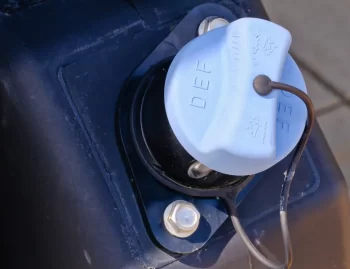
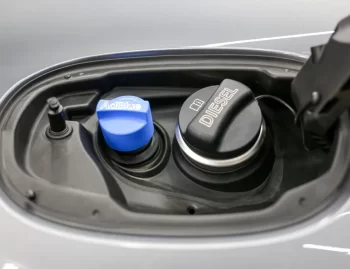
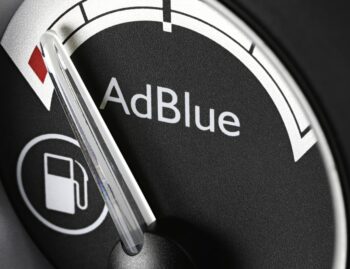
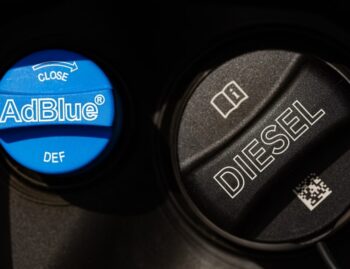
The easiest signs are a separate DEF gauge, a dashboard DEF or AdBlue message, and a filler opening with a blue cap. The owner’s manual provides the final confirmation.
On-Road Trucks and Passenger Diesel Vehicles
Many modern heavy-duty trucks, pickups, buses, vans, and passenger diesel vehicles use SCR systems. In the United States, SCR and DEF became especially common as manufacturers developed engines to meet stricter emissions standards around the 2010 model year and afterward.
That date should not be treated as a universal cutoff. Some vehicles use different emissions-control designs, and requirements vary by engine family, market, model year, and vehicle class. Owners should check the manual or vehicle identification information before purchasing DEF.
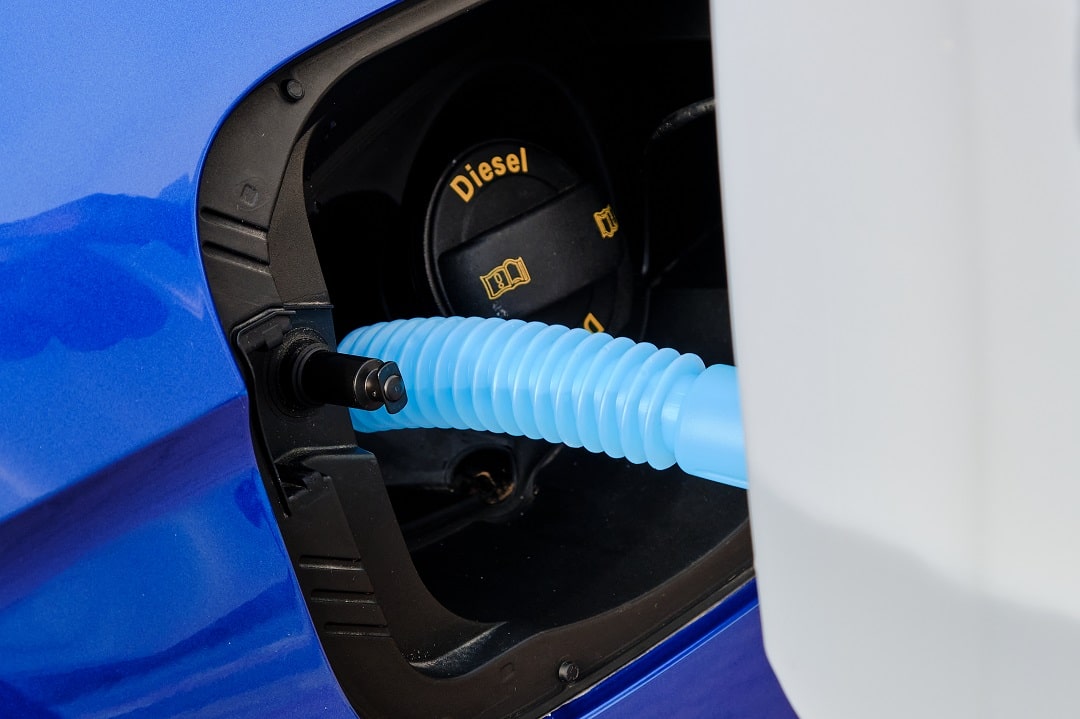
The DEF filler may appear next to the diesel filler, beneath the hood, inside the trunk, or in another manufacturer-selected location. The blue cap is common, but location and labeling can vary.
Construction, Agricultural and Other Off-Road Equipment
SCR systems also appear in tractors, loaders, excavators, generators, airport ground-support equipment, and other off-road diesel machinery. These applications may consume DEF differently from highway vehicles because they operate under different loads, speeds, temperatures, and idle patterns.
Fleet and equipment managers should confirm the required fluid before filling a tank. Standard road-vehicle DEF is normally AUS 32. Some marine and specialized applications use AUS 40, which contains a different urea concentration. AUS 32 and AUS 40 should not be treated as interchangeable unless the equipment manufacturer specifically approves the product.
How to Store DEF
Knowing what is DEF is not enough when purchasing it for a shop, fleet yard, farm, or construction operation. DEF can leave a controlled manufacturing environment in specification and later become unusable because of heat, sunlight, contamination, or unsuitable transfer equipment.
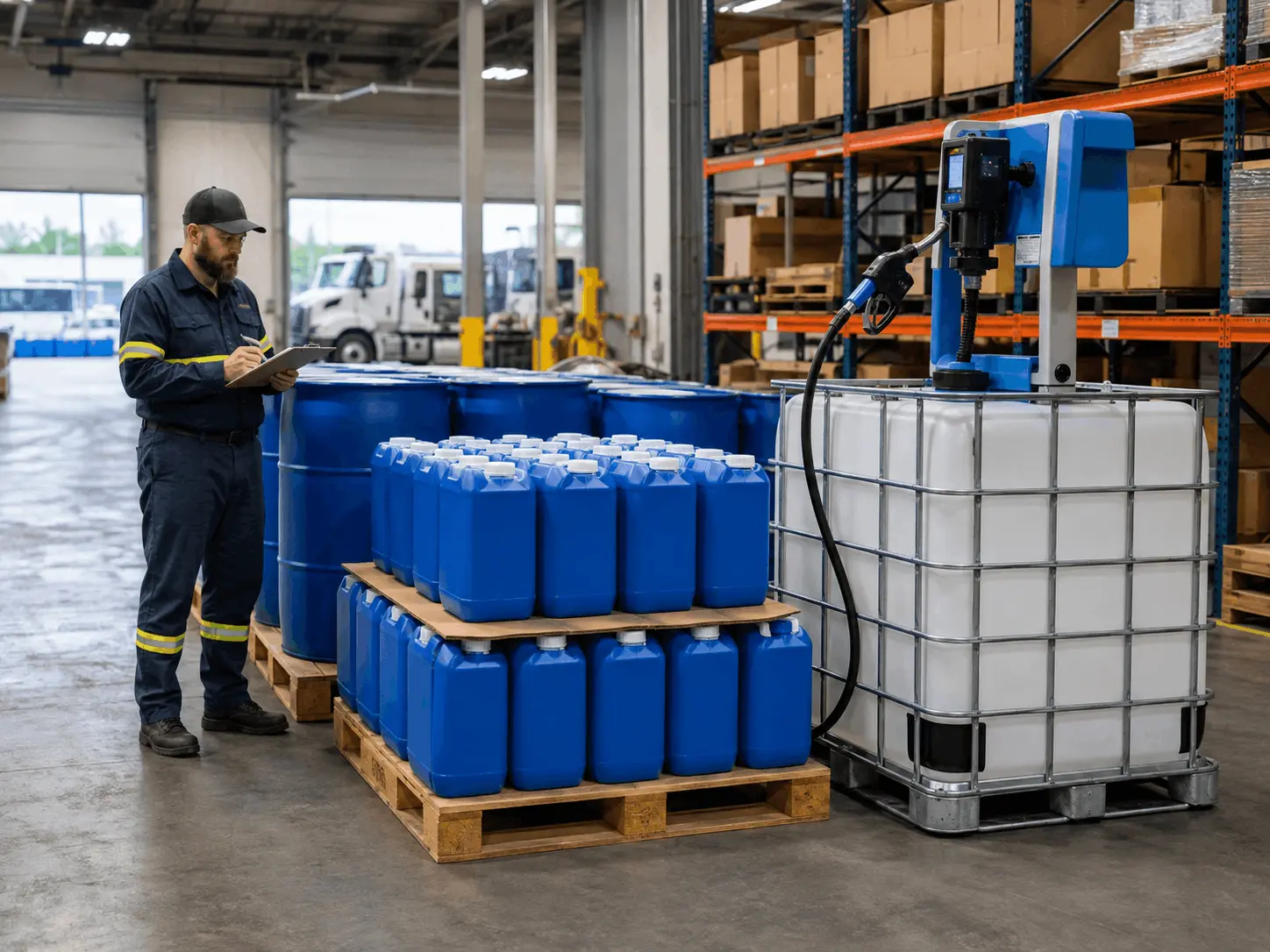
Proper storage protects the fluid and the SCR systems that depend on it. This becomes especially important when a business purchases drums, totes, or bulk quantities that may remain on-site for an extended period.
Protect DEF From Heat and Direct Sunlight
DEF should be stored in a cool, dry, well-ventilated location away from direct sunlight. High storage temperatures accelerate product degradation and shorten usable shelf life. The temperature recommendations printed by the manufacturer should take priority over a general online estimate.
According to API guidance for purchasing and storing DEF, properly stored DEF can have a minimum shelf life of approximately 12 months and may last longer under suitable conditions. Inventory should still be rotated so the oldest product is used first.
Businesses planning bulk orders should compare expected consumption with the storage volume. Buying more DEF than the operation can use within the recommended period may increase the risk of aging, contamination, and wasted inventory.
Use Compatible, Dedicated Storage Equipment
DEF should be stored and dispensed through equipment intended for DEF service. Pumps, hoses, seals, fittings, nozzles, and containers must be compatible with the fluid and kept clean.
Never reuse a container that previously held diesel fuel, gasoline, oil, coolant, fertilizer, cleaning chemicals, or other shop fluids. A container that looks empty can retain enough residue to contaminate DEF. Open buckets, unsealed funnels, dirty transfer pumps, and nozzles left on the ground can introduce dust, water, fuel, and metal particles.
From an operational perspective, many quality problems begin during transfer rather than production. Dedicated equipment, sealed connections, clean caps, documented deliveries, and basic stock rotation can prevent a significant amount of avoidable contamination. Azure Chemical’s guide explains how to purchase, store, and handle DEF correctly.
What Happens When DEF Freezes?
DEF begins to freeze at approximately 12°F or -11°C. Freezing does not automatically ruin properly formulated DEF. Once it thaws completely, the fluid can generally return to its original concentration and remain usable if it has not been contaminated or overheated.
A storage container needs enough expansion space because frozen DEF expands. Pumps and lines should also be designed or managed according to the equipment manufacturer’s cold-weather instructions.
Do not add water, antifreeze, salt, or another chemical to keep DEF liquid. Changing its concentration can take it outside specification and interfere with the SCR system. Allow it to thaw naturally or use storage and dispensing equipment designed for cold conditions.
How to Choose High-Quality DEF
The question “what is DEF?” eventually becomes a purchasing question: How can you tell whether a product is suitable for valuable trucks and equipment? The answer involves more than comparing price or reading the urea percentage on the package.
Reliable DEF should come from a supplier that can explain the product’s formulation, handling process, quality controls, packaging, storage recommendations, and traceability. Sealed packaging and clean delivery procedures matter because even correctly manufactured fluid can be contaminated afterward.
Look for ISO 22241 Compliance and Verifiable Quality Controls
ISO 22241 establishes requirements for AUS 32 quality, handling, storage, and refilling. When evaluating a product, check whether the manufacturer states compliance with the applicable standard and can support that statement with appropriate documentation.
The API also operates a licensing program for qualifying DEF marketers. Where an API certification mark is displayed, buyers can check the organization’s licensee information rather than accepting an unsupported logo or claim.
Fleet buyers should ask how the supplier verifies concentration, controls contamination, identifies batches, cleans transfer equipment, and manages bulk deliveries. These questions provide more useful information than a broad claim that the product is “premium.”
Signs That DEF May Be Contaminated or Out of Specification
Unexpected color, visible debris, a broken seal, strong contamination odors, improper storage history, mixed shop fluids, or persistent dashboard warnings can indicate a problem. Crystals around a cap or nozzle may result from spilled DEF drying, but crystals inside stored fluid require closer inspection.
Appearance alone cannot confirm that DEF meets specification. A clear liquid can still have the wrong concentration or contain dissolved contaminants. When quality is uncertain, avoid relying solely on sight or smell. Isolate the product, record its batch information, contact the supplier, and test it with appropriate equipment.
Fleet managers can review these practical methods for testing diesel exhaust fluid before deciding whether questionable inventory should remain in service.
Frequently Asked Questions
The following answers address common practical questions from drivers, equipment operators, and fleet managers. When the topic requires more detail, the supporting link appears naturally in the answer rather than on the question itself.
How Does DEF Work in SCR Systems?
DEF is injected into the hot exhaust upstream of the SCR catalyst. Heat converts its urea component into ammonia, which reacts with nitrogen oxides over the catalyst and converts them primarily into nitrogen and water vapor.
The tank, pump, dosing module, injector, sensors, and catalyst must work together. This guide to DEF system operation explains the major components in more detail.
Where Do I Refill the DEF Tank on My Truck?
Many trucks place the DEF filler near the diesel fuel opening and identify it with a blue cap. Other vehicles place it under the hood or in another protected location. Check the owner’s manual if the filler is not clearly visible.
Never guess based only on cap location. Adding DEF to the diesel tank can lead to expensive fuel-system contamination. The detailed truck DEF refill instructions explain how to locate the inlet and refill safely.
Can I Use Automotive Urea Instead of DEF?
You should use a finished DEF product that meets the specification required by the vehicle manufacturer. Do not pour dry urea, a urea concentrate, agricultural urea, or an unidentified automotive urea solution into the DEF tank.
DEF requires the correct concentration, technically pure urea, purified water, controlled manufacturing, and clean handling. The article on fertilizer-grade urea and DEF production explains why the word “urea” alone does not establish compatibility.
How Long Does DEF Last in Storage?
DEF commonly has a minimum shelf life of around 12 months when stored under suitable conditions, but heat can shorten that period. The actual usable life depends on the manufacturer’s packaging, storage temperature, sunlight exposure, contamination control, and whether the container remains sealed.
Check the date or batch code and follow the label instructions. This guide to how long diesel exhaust fluid lasts provides more storage context.
Can You Run a Diesel Without DEF?
A diesel engine can mechanically burn fuel without DEF, but an SCR-equipped vehicle may not operate normally when the tank is empty. The emissions system cannot reduce NOx as designed, and the vehicle may issue warnings, limit performance, or prevent a restart according to its software.
Current outcomes vary by vehicle and may also change through manufacturer software updates. The explanation of why modern diesel trucks rely on DEF covers the relationship between DEF, SCR operation, and emissions compliance.
Can You Make Your Own DEF Fluid?
Making compliant DEF is not as simple as mixing 32.5% urea with 67.5% water. The urea and water must meet strict purity limits, and production, storage, and dispensing must prevent contamination.
A homemade mixture may have the correct concentration while still containing minerals, metals, agricultural additives, or particles that can affect the SCR system. Buying correctly manufactured DEF is less risky than attempting to reproduce a specification-controlled chemical product.
Can I Run Water Instead of DEF?
No. Water does not contain the urea needed to produce ammonia and reduce NOx inside the SCR catalyst. Even deionized or distilled water cannot perform DEF’s chemical function.
Adding water also changes the expected concentration and can trigger quality faults, warning lights, performance restrictions, or service problems. Advice suggesting that water can “fool” a DEF system ignores the sensors and NOx monitoring used by modern vehicles. Azure Chemical addresses similar misinformation in its article about common DEF and AdBlue myths.
What Is BlueDEF?
BlueDEF is a commercial brand of diesel exhaust fluid, not a separate category of fluid. Standard BlueDEF is marketed as a 32.5% high-purity synthetic urea and 67.5% deionized-water solution for SCR-equipped diesel engines.
The brand name should not be confused with the generic term DEF. When comparing BlueDEF with another product, focus on the fluid’s specification, quality controls, certification, compatibility, storage history, and packaging condition. The manufacturer provides additional composition information on the official BlueDEF product page.
Conclusion
Understanding what is DEF helps diesel owners avoid several expensive mistakes. DEF is a precisely formulated emissions-control fluid, not diesel fuel, ordinary water, fertilizer solution, or a product that should be mixed at home. Its 32.5% high-purity urea concentration, purified water, clean manufacturing, proper storage, and uncontaminated dispensing all contribute to reliable SCR operation.
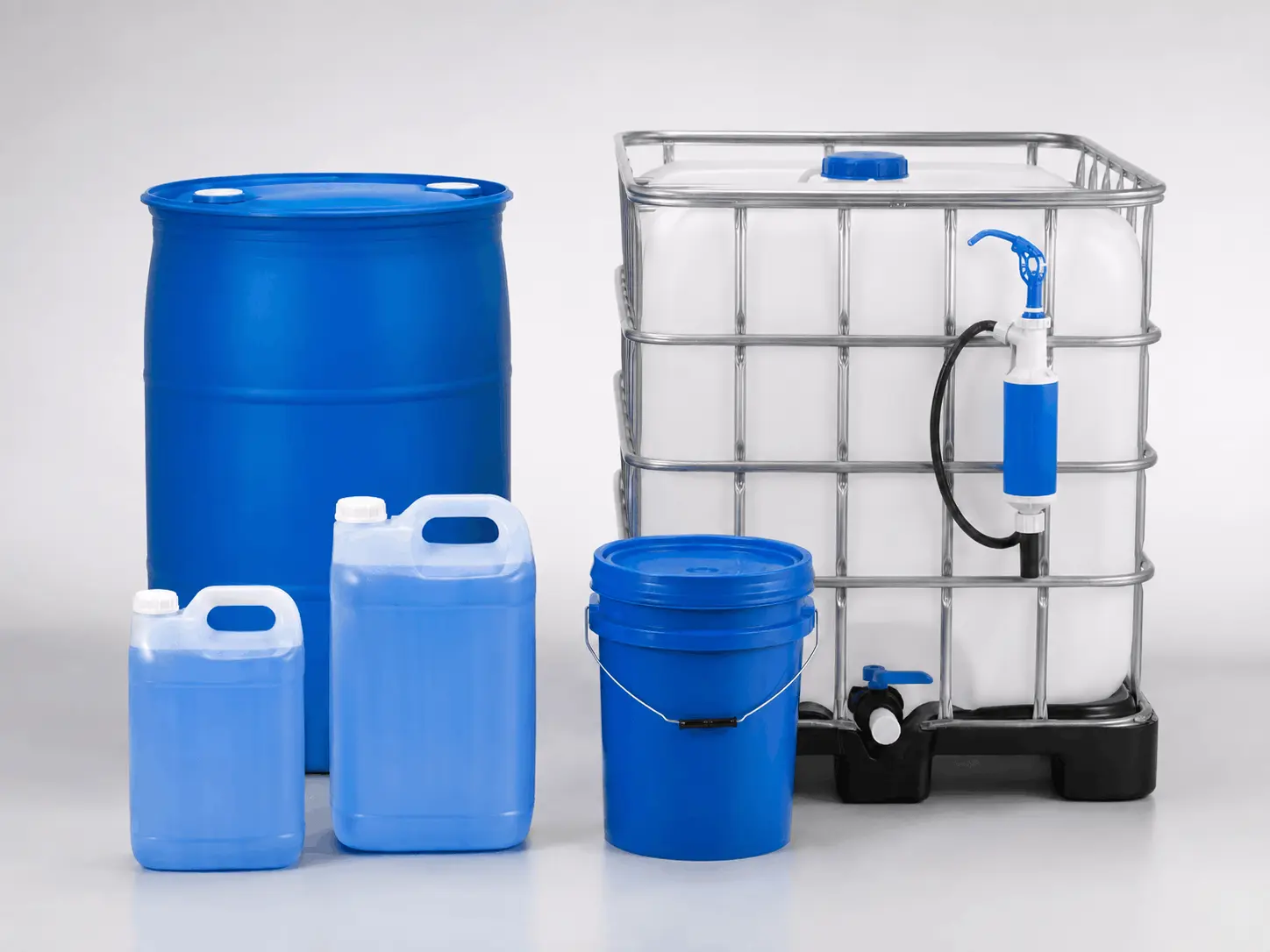
For fleet managers and equipment operators, the quality of the fluid is only one part of the decision. Consistent supply, clean delivery, suitable packaging, storage planning, batch traceability, and knowledgeable support also affect day-to-day reliability.
Azure Chemical manufactures and supplies diesel exhaust fluid for businesses that need dependable quality and practical delivery options. Explore Azure Chemical’s DEF solution and contact the team to discuss packaged, fleet, or bulk DEF requirements.